

Workday co-founder Aneel Bhusri returns as CEO, ending Carl Eschenbach's 2-year tenure
 February 9, 2026
- Summary:
- Workday CEO Carl Eschenbach unexpectedly passes the baton back to the company's co-founder Aneel Bhusri, two years after taking sole charge as his anointed successor.
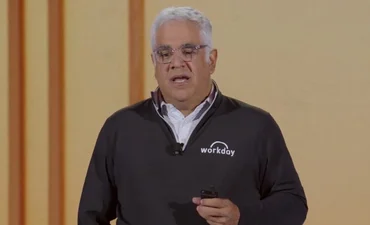
In a surprise move, enterprise applications powerhouse Workday today announced that Carl Eschenbach is stepping down as CEO and from its board after just two years in the role — or three if you add his time as co-CEO alongside co-founder Aneel Bhusri, who now returns as sole CEO. In a press statement, the company gave no further clue to the reasons for Eschenbach's sudden departure, unless you count Bhusri's comments about the impact of AI on its future:
We're now entering one of the most pivotal moments in our history. AI is a bigger transformation than SaaS — and it will define the next generation of market leaders. I'm energized to return as CEO, working alongside our presidents Gerrit Kazmaier and Rob Enslin, and I'm excited about the opportunity in front of us.
Eschenbach's association with Workday goes back to February 2018, when he joined its board following 14 years in leadership roles at VMWare and a two-year stint as a partner at Sequoia Capital. He was named as co-CEO in December 2022, with a one year timeline to become sole CEO in January 2024 — effectively groomed as heir-apparent to co-founder Bhusri.
It's fair, then, to ask what went wrong? At this point, we can only speculate. But Eschenbach's tenure has been marked by massive change at Workday, particularly in its technology leadership and operations, which could not have been forecast at the time of his appointment, as well as several painful rounds of layoffs.
Technology changes
AI has had a particularly profound impact, all under Bhusri's mentoring in his role as Executive Chairman, where he retained the lead on innovation at the company. The entire technology leadership has changed in the past year, driven both by a series of AI-first acquisitions and by key hires from Google Cloud, such as Gerrit Kazmaier, who assumed the role of President of Product & Technology last March, and his former Google colleague Peter Bailis, who joined shortly afterwards as CTO. They put in train changes that were described to me last July by Jerry Ting, founding CEO of Evisort, which Workday acquired a year ago, and who is now VP and Head of Agentic AI:
[P]art of what [we're] doing right now, organizationally, is unifying the different platforms — UI, AI, our databasing teams — all in the same reporting line, so that when we say, 'Hey, we have to build this agent,' it's a top-down integrated stack. That's a big change for Workday, a very large change.
Other AI acquisitions have included Sana, which Workday positions as enabling a new conversational user experience, low-code agent builder Flowise and conversational recruitment app Paradox. Behind the scenes, Bhusri has been instrumental in driving all this flurry of activity, aiming to recapture the challenger spirit that he recalls from Workday's early years. As Ting told me:
When I met with Aneel, he told me, 'Jerry, when Workday was 20 people, we thought just like you.' In Aneel's mind and his heart, this is his baby. He doesn't want us to become an old ERP system. He wants us to take the hill.
I met with Aneel as a part of this role, and he asked me, 'Jerry, how do you bring that startup AI founder mindset to Workday?'
Different challenges
This new mindset is not one that Eschenbach has experience of. When he was appointed, it seemed as though Workday was on a settled trajectory where it simply needed to consolidate its growth. Three years later, it faces entirely different challenges. Perhaps he found it difficult to keep pace with the change required across the Workday organization, its partners and customer base. Or maybe his desire to drive faster expansion internationally and rely more on external partners to drive growth didn't sit well with Workday's traditional emphasis on close customer relationships. And while he seems to have been well regarded by customers and investors, layoffs were becoming an increasingly regular feature of his tenure. They began with a 3% cut in headcount just weeks after he took up the reins as co-CEO, and then another 8.5% one year ago. Last week saw a further 2% round of layoffs. Perhaps what Mark Hawkins, Workday vice chair and lead independent director, described in today's press release as Bhusri's "deep connection to Workday's culture" is now needed to soothe morale at the vendor.
There are external pressures building, too. Activist investor Elliott Investment revealed a $2 billion stake in the vendor in September, albeit expressing confidence at the time in Workday's leadership and planned operating model and investments. And of course last week's so-called 'SaaSpocalypse' which saw Workday's shares drop in line with most other leading SaaS stocks won't have calmed nerves. It seems churlish to reduce such a fraught and weighty decision to such simple terms, but perhaps with Workday due to report its Q4 results in just over two weeks' time, it was now or never to make this drastic move.
Eschenbach will continue to provide strategic advice to his CEO successor, who commented:
I'm deeply grateful to Carl for leading Workday through an important chapter — scaling the company, building on our foundation, and positioning us well for what's ahead.
For his part, Eschenbach stated:
It's been a privilege to serve as CEO over the past three years and I'm proud of all we achieved — instilling greater operational discipline, expanding globally, broadening our industry focus, and laying meaningful groundwork in AI. I could not be more grateful to Aneel and to our board for the trust they placed in me to lead this special company, and I look forward to supporting Aneel and Workday in this next chapter.
My take
The curse of succession in founder-led tech vendors strikes again. As I commented when Eschenbach was first appointed as co-CEO:
[F]ounders aren't good at handing over the reins... The success of such arrangements all comes down to the trust that exists between the individuals concerned, and the self-discipline of the founder to be able to draw a line under their reign.
But as I noted above, who could possibly have foreseen the extent to which Workday is having to reinvent itself and how it builds and delivers product over the past year or two? The challenge for Bhusri now is to balance that "startup AI founder mindset" with the demands of running and growing an established global corporation. His goal, surely, is to take some time to course-correct and then find an opportunity to step back once again. But is there ever a right time for a tech founder to step back? There doesn't seem to be an easy answer to that one.