

More carrot, less stick - how pizza delivery informs digital transformation at a 177 year old UK retail brand
 April 3, 2026
- Summary:
- Consumer expectations of Boots have changed since 1849. Today, online and offline experiences should each inform the other.
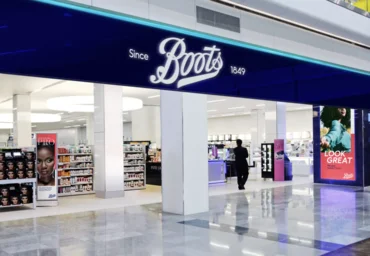
It’s tempting to categorize Boots as a chain of chemists/pharmacists, but in fact it’s one of the UK’s leading omni-channel retailers, a place to buy cosmetics, electrical items, clothing and food, as well as collecting your latest medication. The firm has a long heritage, but has inevitably undergone immense modernization over the years. As Fiona Brown, Director of Digital Transformation, observes:
We started digital 25 years ago, so behind the scenes, things are a little bit clunky. So my big program at the moment is looking at re-platforming our entire digital infrastructure and all our processes to make sure we can continue to give customers what they're looking for.
Today, consumer expectations are very different to those of 1849 when Boots was founded. This is the age of online retail and e-commerce and fast delivery, so it’s no surprise to find that people want to able to track the progress of their prescriptions in much the same way as they would a pizza, although that’s a comparison that can get you into trouble, says Brown:
I got told off for saying that, because if you're a highly qualified pharmacist and you know how important it is that prescriptions are absolutely spot on, you're not a big fan of it being compared to a pizza. I’ve been known to talk about ordering an Uber as well. Neither of those things go down terribly well with those amazing professionals.
But it's what our customers are thinking and feeling absolutely. We know it's not about what goes on on the Superdrug website versus the Boots website. It's what people see in all their interactions with all the brands that are out there. So if they've had an amazing experience with BT or with B&Q or with any other big brands, that starts to set the bar for what they expect. So they want to see things being as straightforward as they possibly can be everywhere. So yeah, getting a prescription should be as straightforward as getting a pizza.
Store blind
Not only do people come to the Boots website with differing expectations, that inevitably carries over into the physical stores on the high street - and those are harder to track and keep on top of, admits Brown:
It can be really tricky. What we can do digitally is really helping us in stores as well. Obviously, somebody could walk into our store, walk around, look at some things, walk out again. We don't really know what's happened if they do that. Online, we've got a much better idea what's going on. So we know did they did they put something in the basket and then something went wrong at checkout? Did they not find the thing they want? Did they find something? But then maybe we're struggling somewhere in the details.
We can work out what's going on and we can do something about it. Then, depending on what that thing was we need to fix, we might be able to fix the same thing from a store perspective as well. It might be saying that a product's in the wrong section for where a customer expects it to be, or something like that.
As to that re-platforming project Brown alluded to, that’s a major challenge in its own right, not least because of the need to prevent trying to ‘boil the ocean’ and do all things. Brown explains the danger:
You build everything everybody's got today, because nobody wants to give anything up, then everything they want next, and then change a few things based on what we think or what we've heard, or maybe some data in the mix. And it costs us a fortune, because, you're doing everything, and then it's really heavy and really tricky, probably quite slow for customers.
Data-driven decisions and prioritization are key:
Actually using data means we can work out what we should really build; which things are actually amazing and we should re-build them as they are, not change them just for the sake of it; which things customers aren't using at all and we could get rid of, even though somebody senior might like them rather a lot. Genuinely, there's always a few things [we] aren’t fussed about. They can go. Once you actually know whether the customers are using them or not, you can say, 'We've got this thing here that nobody's using versus these new things that customers are telling us they want. Let's spend the money on what customers actually want’
Carrots
When it comes to rolling out such change programs, Brown is a believer in more carrot, less stick. That means ensuring there’s as much buy-in for what you plan to do as possible: .
We've got champions in all the teams. We've got good senior sponsorship, which always makes a massive difference. We know people are busy. There's no point saying, 'Do this, do this, do this'. They've got enough things to do in a day. So some of it's about creating reasons why. How's it going to help with the day job? Show that other people are using it, so ‘This team's doing a lot with it. You guys maybe aren’t quite’. Peer pressure.
We're building it into recognition schemes. We've got some really nice recognition schemes, and we're doing things like ‘best insight’ as part of that now. We had some competitions on Black Friday as well, which went down really well. We've also done a lot of enablement work. We’ve done general support sessions. We've also done specific, tailored sessions for different teams where the standard approach wasn't quite working for them, they had maybe some specific things they needed to tackle, and we've been able to do special workshops for them to work through what would make the difference. And that's helped a lot, just supporting people on their journey and making it a bit easier for them day-to-day.
Next up, of course, is AI, which Brown says she is excited about due to:
The opportunity to speed up getting to the insights, maybe even find out that there's something not quite right and get on with fixing it, rather than spend the time finding a problem, actually get on with fixing the problem So it's definitely something in that efficiency space is really interesting, but also being able to do more. The more we can get out of the tool, the more we can do with those insights.
Her bottom line advice around digital transformation is simple:
I'd go with just do it. Get it. Make it fun. Think about what it'll cost you if you don't use data. So, how much are you spending on building new things or changing something and what if you get that wrong, [when] this could help me get it right.
She concludes with a universal maxim:
None of us have got unlimited budgets, so it's do the most.
